Beyond Cricket Heartlands: Surprise States Producing IPL 2026 Talent
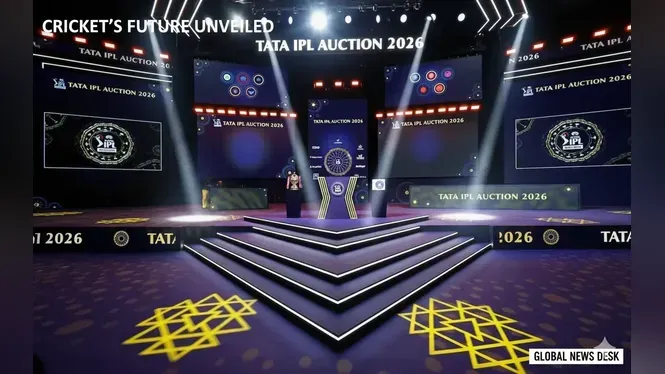
Mumbai, December 25, 2025: The IPL 2026 auction not only reshaped team rosters but also revealed fascinating insights about cricket's financial geography. While Maharashtra, Madhya Pradesh and Uttar Pradesh dominated player numbers (5 each), Rajasthan emerged as the surprise revenue champion with ₹27.95 crore earnings - proving that quality trumps quantity in T20's biggest marketplace.
The Economic Powerhouses of Indian Cricket
Our analysis of all 42 Indian players sold at the IPL 2026 auction reveals how traditional cricket hubs continue to dominate revenue generation while emerging regions make steady progress:
1. Rajasthan (₹27.95 Crore)
This western state generated nearly 20% of total Indian player earnings despite having just 4 representatives:
- Kartik Sharma (Batter) - ₹14.2 crore to CSK
- Rahul Chahar (Bowler) - ₹5.2 crore to CSK
- Mukul Choudhary (Batter) - ₹2.6 crore to LSG
- Ravi Bishnoi (Bowler) - ₹7.2 crore to RR
Key Insight: Rajasthan's premium spin exports (Chahar and Bishnoi) combined with Sharma's record batting bid demonstrate the state's growing reputation for producing match-winners.
2. Uttar Pradesh (₹15.7 Crore)
The northern state matched Maharashtra's player count but outperformed them financially:
- Prashant Veer (All-rounder) - ₹14.2 crore to CSK
- Naman Tiwari (Bowler) - ₹1 crore to LSG
- Kartik Tyagi (Bowler) - ₹30 lakh to KKR
- Shivam Mavi (Bowler) - ₹30 lakh to SRH
- Vishal Nishad (Bowler) - ₹30 lakh to PBKS
Financial Highlight: Veer's mega-signing accounted for 90% of UP's earnings, showing how one elite player can transform a state's economic returns.
3. Madhya Pradesh (₹14.9 Crore)
Central India's consistent production line delivered balanced returns:
- Venkatesh Iyer (All-rounder) - ₹7 crore to RCB
- Mangesh Yadav (All-rounder) - ₹5.2 crore to RCB
- Akshat Raghuwanshi (Batter) - ₹2.2 crore to LSG
- Kuldeep Sen (Bowler) - ₹75 lakh to RR
- Shivang Kumar (All-rounder) - ₹30 lakh to SRH
Notable Trend: MP's all-rounders commanded 85% of their total earnings, highlighting the premium on multi-skilled players.
4. Maharashtra (₹3.05 Crore)
The traditional powerhouse surprisingly ranked fourth financially despite fielding 5 players:
- Rahul Tripathi (Batter) - ₹75 lakh to KKR
- Prithvi Shaw (Batter) - ₹75 lakh to DC
- Prashant Solanki (Bowler) - ₹30 lakh to KKR
- Sahil Parakh (Batter) - ₹30 lakh to DC
- Vicky Ostwal (All-rounder) - ₹30 lakh to RCB
Market Shift: Maharashtra's relatively low returns reflect the auction's preference for emerging talents over mid-career players from established systems.
5. Delhi (₹3.3 Crore)
The capital region punched above its weight with strategic sales:
- Tejasvi Dahiya (Batter) - ₹3 crore to KKR
- Mayank Rawat (All-rounder) - ₹30 lakh to MI
- Sarthak Ranjan (All-rounder) - ₹30 lakh to KKR
Efficiency Note: Delhi generated 91% of its earnings from just one player (Dahiya), showcasing concentrated talent development.
Emerging Cricket Economies
While traditional states dominated earnings, these regions showed promising financial growth:
Jammu & Kashmir (₹8.4 Crore)
Auqib Nabi's single ₹8.4 crore sale to DC outperformed entire states, proving J&K's growing fast-bowling reputation.
Bihar (₹60 Lakh)
Two players sold at base price (Mohammd Izhar and Sakib Hussain) marked Bihar's auction debut - a significant milestone for eastern India's cricket development.
Puducherry (₹1.05 Crore)
The union territory doubled its previous best earnings through Aman Khan (₹75 lakh) and Satvik Deswal (₹30 lakh).
State-wise Earnings Breakdown
Complete financial ranking of states/regions:
- Rajasthan - ₹27.95 crore
- Uttar Pradesh - ₹15.7 crore
- Madhya Pradesh - ₹14.9 crore
- Delhi - ₹3.3 crore
- Maharashtra - ₹3.05 crore
- Jharkhand - ₹1.2 crore
- Punjab - ₹1.8 crore
- Hyderabad - ₹60 lakh
- Jammu & Kashmir - ₹8.4 crore
- Karnataka - ₹60 lakh
- Bengal - ₹1.3 crore
- Gujarat - ₹1.2 crore
- Bihar - ₹60 lakh
- Puducherry - ₹1.05 crore
- Vidarbha - ₹60 lakh
- Kerala - ₹30 lakh
- Andhra - ₹30 lakh
- Mumbai - ₹1.35 crore
- Saurashtra - ₹30 lakh
- Railways - ₹95 lakh
What This Means for Cricket's Economy
The IPL 2026 auction earnings reveal three crucial trends for investors and state associations:
- Premium on Specialized Skills: States producing quality spinners (Rajasthan) and power-hitters (UP) earned disproportionate returns
- Emerging Region Potential: J&K and Bihar's successful sales will accelerate infrastructure investments in non-traditional areas
- All-rounder Advantage: 7 of the top 10 earnings came from players with multiple skills - a clear directive for coaching programs
As state associations analyze these results, the financial incentives are clear: developing market-ready specialists rather than volume production is the key to future auction success. With the IPL's economic impact growing annually, these state-wise earnings provide actionable data for reshaping India's cricket development roadmap.