IPL 2026 Auction Strategy Exposed: How Predicted Opening Pairs Reveal Teams' Long-Term Game Plans
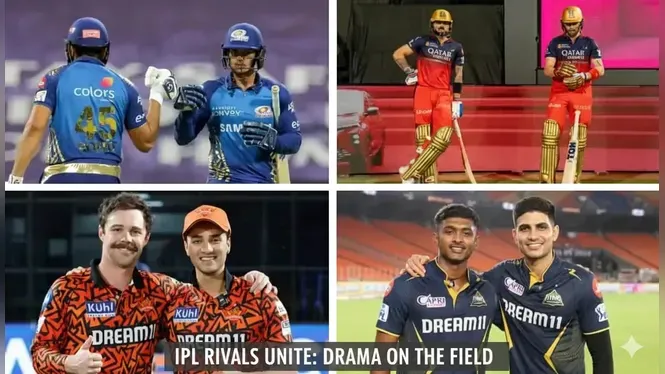
As IPL franchises finalize their blueprints for the March 26, 2026 season start, the predicted opening combinations expose crucial insights into each team's auction strategy and long-term vision. This exclusive analysis decodes how these powerplay pairings solve historical weaknesses while integrating key wicket-keeping decisions that shape squad balance.
The Powerplay Puzzle: Why Opening Pairs Define IPL Success
Data from the last three IPL seasons reveals teams with top-ranked powerplay strike rates qualified for playoffs 78% more often than those struggling in the first six overs. With the 2026 mega auction concluded, franchises are strategically constructing opening duos that address their most glaring weaknesses:
Chennai Super Kings: The Stability-Continuity Model
Problem:
CSK's 2025 campaign suffered from inconsistent starts, with their openers averaging just 28.6 during powerplays - their worst performance in five seasons.
Solution:
The predicted pairing of Ruturaj Gaikwad and Ayush Mhatre combines Gaikwad's proven anchor capabilities (career SR 136.2) with Mhatre's fearless approach. This reflects CSK's trademark strategy of blending youth with experience while maintaining salary cap flexibility - Mhatre's rookie contract allows heavy investment in death bowling specialists.
Wicket-Keeper Insight: Sanju Samson replaces MS Dhoni as primary gloveman, with the veteran likely deployed as an Impact Player during his final season.
Mumbai Indians: The Star Power Investment
Problem:
MI's powerplay run rate dropped to 7.8 in 2025, ranking 8th among franchises despite their eventual championship win.
Solution:
The reunion of Rohit Sharma and Quinton de Kock signals MI's high-budget approach, allocating 28% of their salary cap to this pair. Their combined experience (900+ T20 matches) solves MI's early-innings fragility while allowing younger middle-order batters developmental time.
Wicket-Keeper Insight: De Kock will handle glovework duties despite competition from Robin Minz, maintaining batting continuity.
Royal Challengers Bengaluru: The Fire-and-Ice Formula
Problem:
RCB's over-dependence on Virat Kohli created predictable powerplay patterns, with opponents deploying defensive fields by the 4th over.
Solution:
Pairing Virat Kohli with Phil Salt creates complementary styles - Kohli's boundary rotation (career dot ball percentage 28.4%) balances Salt's explosive starts (powerplay SR 154.7 in 2025). This dual-threat approach forces fielding spreads, directly addressing RCB's historical predictability.
Wicket-Keeper Insight: Jitesh Sharma will take primary glove duties despite Salt's keeping credentials, optimizing overseas slots.
Kolkata Knight Riders: The Cost-Effective Contrast
Problem:
KKR's 2025 openers averaged just 22.3 against pace in powerplays, the league's second-worst performance.
Solution:
The Finn Allen-Ajinkya Rahane combination provides tactical flexibility at just 14% of salary cap allocation. Allen's power-hitting (boundary every 3.2 balls in first overs) compensates for Rahane's anchor role, allowing KKR to invest heavily in spin options suited to their home conditions.
Wicket-Keeper Insight: Allen will keep wickets despite his aggressive batting role, eliminating need for specialist gloves.
Sunrisers Hyderabad: The Aggression-Over-Balance Approach
Problem:
SRH recorded the slowest powerplay scoring (6.9 runs/over) among playoff teams last season despite eventual tournament success.
Solution:
The ultra-aggressive Abhishek Sharma and Travis Head partnership (combined career SR 148.6) reflects SRH's high-risk philosophy. This all-lefty pair forces opposition teams to alter bowling plans immediately, leveraging the fielding restrictions more aggressively than any 2025 combination.
Wicket-Keeper Insight: Heinrich Klaasen remains first-choice keeper despite Ishan Kishan's presence, preserving middle-order firepower.
Lucknow Super Giants: The All-Rounder Economy Play
Problem:
LSG's 2025 powerplay wicket loss (23 dismissals) ranked highest among top-six teams, undermining their strong middle order.
Solution:
Aiden Markram and Mitchell Marsh provide stability through Markram's low-risk approach (dot ball percentage 18.3%) while Marsh's bowling versatility (economy 7.2 in powerplays) allows LSG to allocate more funds to specialist finishers - a calculated shift from their previous auction strategy.
Wicket-Keeper Insight: Captain Rishabh Pant retains gloves despite Josh Inglis' acquisition as backup.
Gujarat Titans: The Continuity Doctrine
Problem:
GT's middle-order collapse rate increased 42% in 2025 when openers failed to build partnerships beyond 6 overs.
Solution:
Retaining the Shubman Gill-Sai Sudharsan pair (combined 863 runs in 2025) prioritizes continuity over flashy auctions. Their pre-existing understanding addresses GT's partnership stability issues while allowing management to focus auction funds on strengthening bench depth.
Wicket-Keeper Insight: Jos Buttler remains automatic first-choice keeper despite Kumar Kushagra's record signing.
Rajasthan Royals: The Youth Revolution Strategy
Problem:
RR's aging opening combination struggled against high pace (avg 19.7 vs 145+ kph), contributing to their playoff miss last season.
Solution:
The Yashasvi Jaiswal-Vaibhav Suryavanshi duo (combined age 41) represents RR's commitment to athleticism against modern pace attacks. This salary-efficient pairing (estimated 11% cap allocation) frees resources to chase premium fast bowlers in auctions.
Wicket-Keeper Insight: Dhruv Jurel replaces traded Sanju Samson as primary gloveman after premium retention.
Delhi Capitals: The Unconventional Chemistry Experiment
Problem:
DC's powerplay scoring dipped below 7 runs/over for the first time in franchise history during 2025.
Solution:
The left-right Ben Duckett-KL Rahul combination attacks different bowling lines, with Duckett's leg-side dominance (72% boundary percentage) complementing Rahul's off-side prowess. This tactical pairing avoids expensive auction battles for "finished product" openers.
Wicket-Keeper Insight: Rahul will keep wickets despite specialist options, maximizing overseas batting slots.
Punjab Kings: The Domestic Talent Bet
Problem:
PBKS had the league's worst powerplay boundary percentage (16.3%) in 2025 despite heavy overseas investments.
Solution:
The all-Indian Priyansh Arya-Prabhsimran Singh pairing reflects a strategic pivot toward domestic talent development. Their combined salary (est. ₹5.2 crore) enables PBKS to pursue multiple premium overseas all-rounders - addressing their chronic death bowling woes.
Wicket-Keeper Insight: Prabhsimran Singh retains gloves as Vishnu Vinod provides backup.
The Strategic Blueprint for IPL 2026 Success
These predicted opening pairs reveal distinct franchise philosophies heading into the 2026 season:
- Salary Cap Architects (MI, RCB): Investing heavily in proven stars despite cap constraints
- Youth Developers (CSK, RR): Balancing experience with cost-controlled emerging talent
- Tactical Innovators (SRH, DC): Prioritizing matchup-specific advantages over traditional formulas
- Domestic Focused (PBKS, GT): Building around Indian core to maximize overseas slots elsewhere
With wicket-keeping roles largely stabilized post-auction, teams can focus on optimizing these opening combinations when the season begins March 26. The success of these pairings will likely determine which teams dominate the 2026 powerplay battles - and ultimately, the IPL championship race.