Teammate vs. Legend: Decoding Chris Jordan's Controversial Rohit Omission Through Their MI Partnership Years
The Selection Shockwave
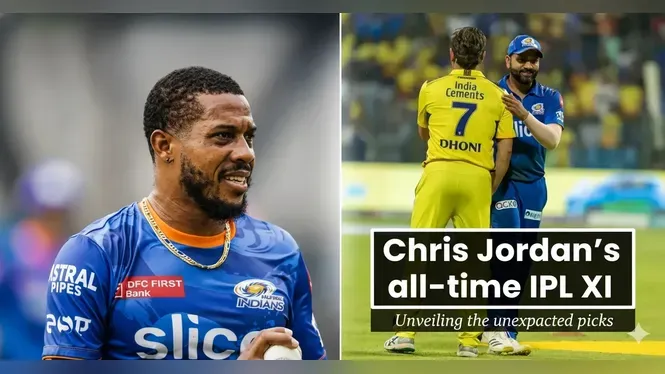
England fast bowler Chris Jordan has ignited fierce debate across the cricket world by omitting Rohit Sharma from his all-time Indian Premier League (IPL) XI. The former Mumbai Indians pacer's selection, revealed ahead of the 2026 season, prioritizes explosive powerplay specialists over the most successful captain in IPL history - a decision that exposes cricket's evolving T20 priorities.
Jordan's Dream Team Composition
Jordan's star-studded lineup features:
- Openers: Chris Gayle, Virat Kohli
- Middle Order: Suryakumar Yadav, Suresh Raina, AB de Villiers
- All-rounder: Hardik Pandya
- Captain/Wicketkeeper: MS Dhoni
- Bowlers: Sunil Narine, Jasprit Bumrah, Lasith Malinga, Yuzvendra Chahal
The Captaincy Conundrum
While Jordan appointed MS Dhoni as skipper - acknowledging his five IPL trophies with Chennai Super Kings - the more startling decision was excluding Rohit Sharma, under whom Jordan played during his Mumbai Indians stint. Sharma's record-breaking five IPL titles as captain makes his omission particularly controversial on leadership merits alone.
The Batting Priority Shift
Jordan's selection reveals three fundamental changes in T20 team-building philosophy:
1. Powerplay Domination Over Anchoring
By choosing Gayle and Kohli as openers, Jordan prioritizes batters known for explosive starts. Modern analytics show teams now value powerplay strike rates above all else - Gayle's career IPL strike rate of 148.96 and Kohli's accelerated 152.88 in recent seasons contrast sharply with Rohit's 134.65 since 2020.
2. Middle-Order Flexibility Trumps Top-Order Stability
The inclusion of Suryakumar Yadav (No. 3), Raina (No. 4), and de Villiers (No. 5) creates a flexible middle order capable of both rebuilding and accelerating. This reflects the post-2020 trend where teams stockpile multi-role batters rather than specialist anchors.
3. Leadership as Separate Skill
Jordan's separation of captaincy from batting position suggests franchises now view leadership as an independent skill rather than a bonus attached to top-order batters. This allows teams to optimize their XI for pure performance while still having tactical leadership.
The Rohit Sharma Paradox
Sharma's exclusion highlights the difficult position of anchor-captains in modern T20 cricket:
- Trophy Cabinet vs. Strike Rate: 5 IPL titles vs. sub-135 powerplay strike rate since 2020
- Brand Value vs. Performance Metrics: Massive fan following vs. declining boundary percentage
- Experience vs. Evolution: 200+ IPL matches vs. changing team-building approaches
The Post-2020 T20 Revolution
Jordan's selection mirrors fundamental shifts in franchise cricket strategy:
| Team-Building Element | Pre-2020 Priority | Post-2020 Priority |
|---|---|---|
| Openers | Stable platforms | Powerplay explosions |
| Captaincy | Top-order batsmen | Specialist leaders |
| Middle Order | Anchors | Flexible accelerators |
Expert Reactions and Implications
Cricket analysts suggest Jordan's XI reflects current franchise thinking:
"This isn't about Rohit's quality, but about optimizing each position. Modern teams want specialists at every slot - powerplay destroyers, middle-order innovators, and death bowlers. Anchor-captains struggle to fit this template."
The Future of T20 Team Building
As IPL 2026 approaches, Jordan's selection provides crucial insights into franchise priorities:
- Powerplay strike rates now outweigh career averages
- Leadership is becoming detached from batting positions
- Multi-role players dominate middle-order selections
- Specialist bowlers are preferred over all-round options
Conclusion: Evolution Over Legacy
Chris Jordan's controversial XI selection serves as a watershed moment in understanding T20 cricket's direction. While Rohit Sharma's legacy as IPL's most successful captain remains untouched, his omission highlights the uncomfortable truth of modern franchise cricket - explosive power trumps anchoring stability, and specialized skills outweigh combined roles. As teams prepare for IPL 2026, this selection philosophy will likely influence auction strategies and team compositions, potentially reshaping how future all-time XIs are selected.